Revisions, Revisions, Revisions: The Art of Editing

Any type of content goes through multiple rounds of revisions before getting published. Every aspect of it—grammar to spelling, punctuation to flow, chronology to presentation, even the auxiliary and multimedia aids—is reviewed and revised several times. These amendments, collectively called editing, are not incidental; they upgrade raw data into powerful, strategic content.
Thus, content editing is a process of revising and amending raw data into structured, strategic, and impactful content.
Why is Editing Necessary?
Consider the following scenario.
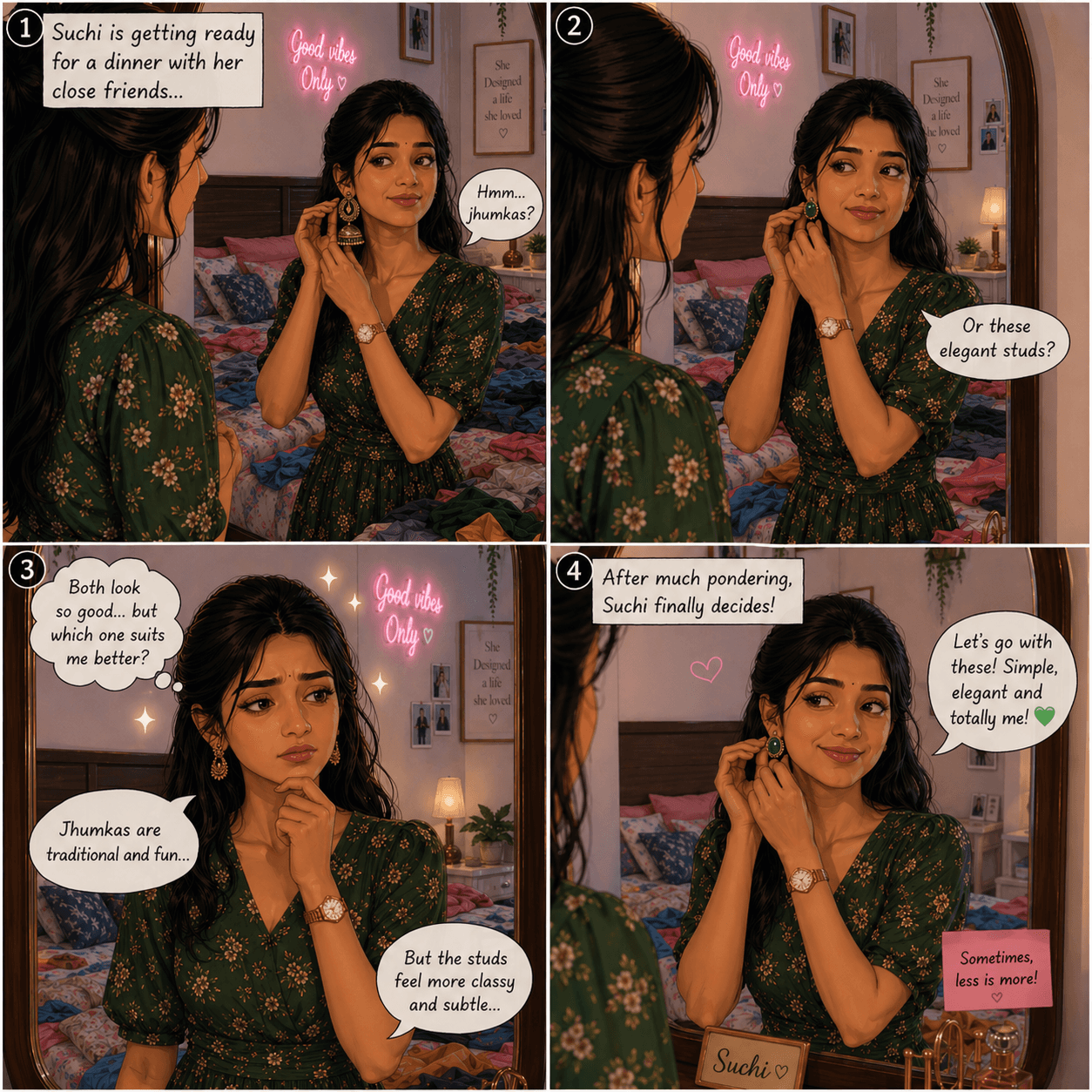
Suchi’s dilemma is so relatable because we all have been there: in the land of revisions. But why these revisions? Because we wish to put our best foot forward. While most physical traits are impossible to change and others are hard to tweak, we rely on styling to enhance the best of them. These styles and revisions help us set the narrative and represent our personality as we want it to come across.
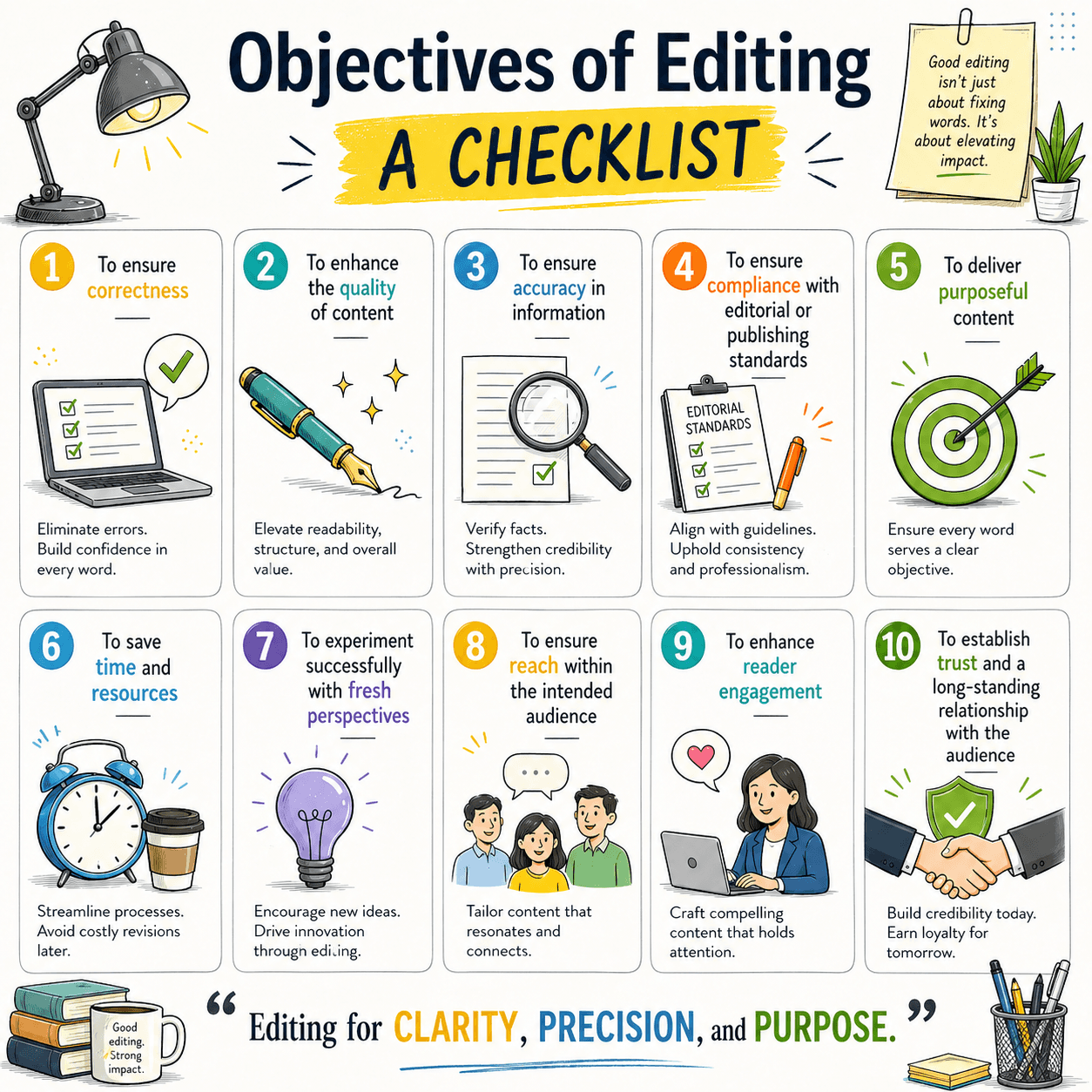
Similarly, editing helps ensure that our content delivers its core message with clarity and precision. Such a content piece reaches the correct audience, who consume it readily towards a purposeful transformation.
Types of Editing
Based on the type of content, editing stage, and the end purpose of the process, editing can be categorised into various types. In the context of written content, irrespective of publishing medium, some common categories are:
Acquisitions Editing or Editorial Assessment
Developmental Editing
Contextual or Structural Editing
Line Editing
Copyediting
Scan Editing
Fact-Checking
How to Edit?
Editing is often considered an artistically inclined profession, for no two editors follow the same process. However, I refute the notion.
Although every editor has their unique processes, there are some general guidelines that all of us follow. For instance, it is a standard rule that the context and structure are edited primarily, followed by grammar and language. Meanwhile, fact-checking and structural editing can be undertaken alongside.
Most importantly, all editors work towards the same end goal: purposeful, precise, and clear content. Hence, editing may appear subjective, but it is in fact a discipline; years of experimentation are required to figure out one’s own process.
Initially, however, editing can be daunting and overwhelming. Drawing on my experience and observations, I have developed guides to help you identify the pulses in raw content and edit your way to clear, precise, and purposeful content. They will help you in maintaining control over your content.
For my fellow experienced editors, I have a message.
Over the years, our processes have become involuntary; we no longer keep track of initial rules and handwritten guides. Processes flow smoothly. However, I often go back to them at my leisure, just to ensure that my foundations don’t get lost within the heavy currents. It is also helpful in keeping track of the advancements and streamlining my own processes for a better flow. I invite you to do the same. Furthermore, I am always looking forward to discussions and constructive feedback. Do reach out; we shall build an enriching partnership.
Conclusively, editing is noble because it adds value and purpose to the content.


