Chaos to Structure with the Editorial Ecosystem


During formative years, certain concepts, owing to their succinct, clear pedagogy, stick with us throughout life. ‘Ecoystem’ is one of those concepts. Remember the image of a lake/pond: the lake being the ecosystem, with all its living and non-living organisms interdependently supporting each other for survival and sustenance. The USP of the concept was that the lake existed as part of nature, interdependent and supportive, while its own ecosystem thrived independently. It was a seamless intersection of successful individual and group dynamics.
What is an Editorial Ecosystem?
An Editorial Ecosystem is a self-sustaining content-generating system within an organisation. Similar to the lake ecosystem, it self-sustains while seamlessly interacting with its universe (organisation). It reduces the overall organisational burden by managing and monitoring its internal processes. It engages the rest of the organisation to ensure that content produced is aligned with the organisational vision and strategy.
Just like an ecosystem, an editorial ecosystem manages itself across the entire lifecycle of any content through an interdependent and interconnected network. It encompasses everything and everyone involved in a perpetual cycle of qualitative and impactful content generation.
Features of Editorial Ecosystem
The actual structure of an editorial ecosystem is dependent on the organisation it is a part of. The unique intent and content requirements of an organisation become the basis on which the editorial ecosystem’s scope of operation, publishing media, dissemination channel(s), and stakeholder interactions are customised. However, irrespective of specific customisations, all editorial ecosystems reflect a set of characteristics.
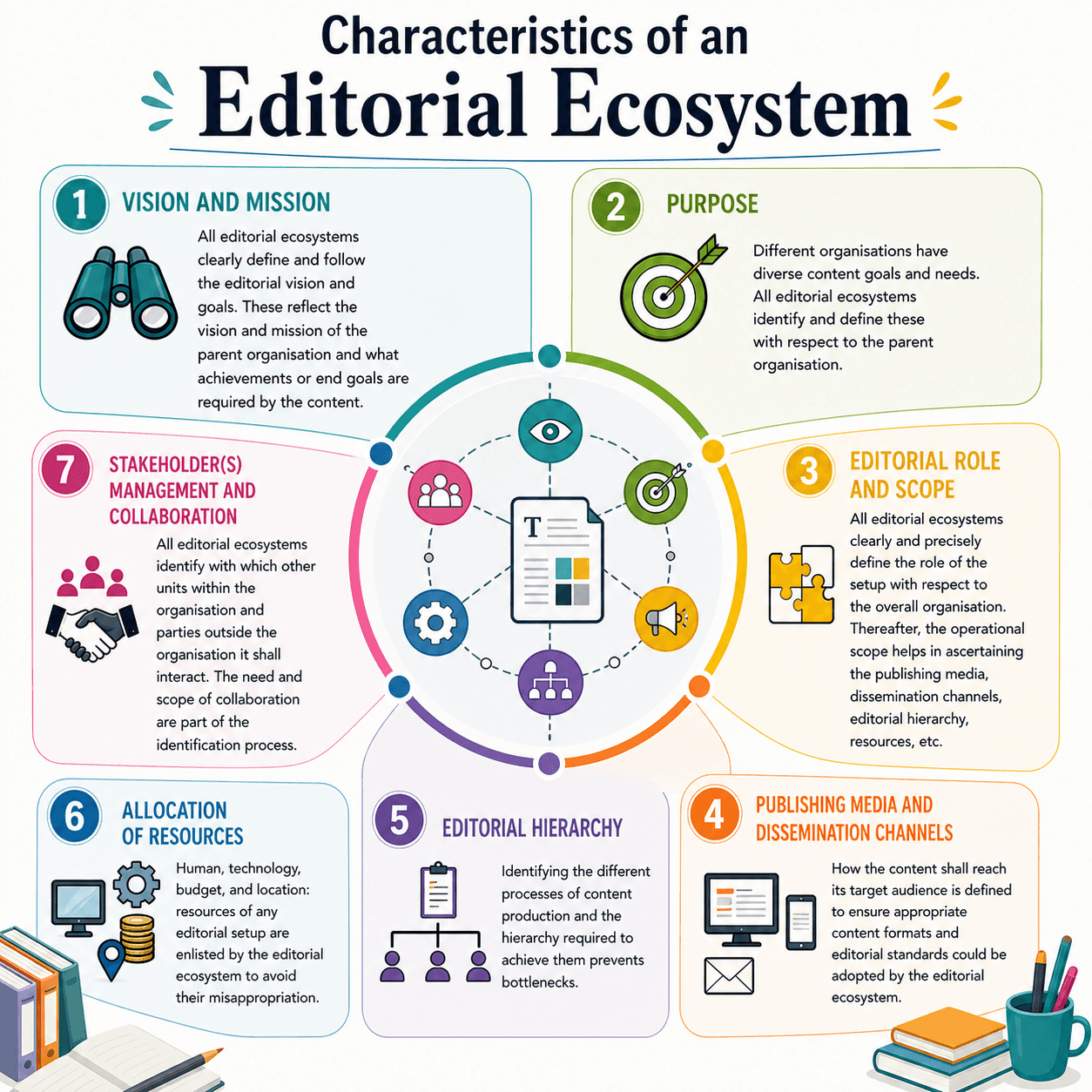
Why are Editorial Ecosystems Necessary?
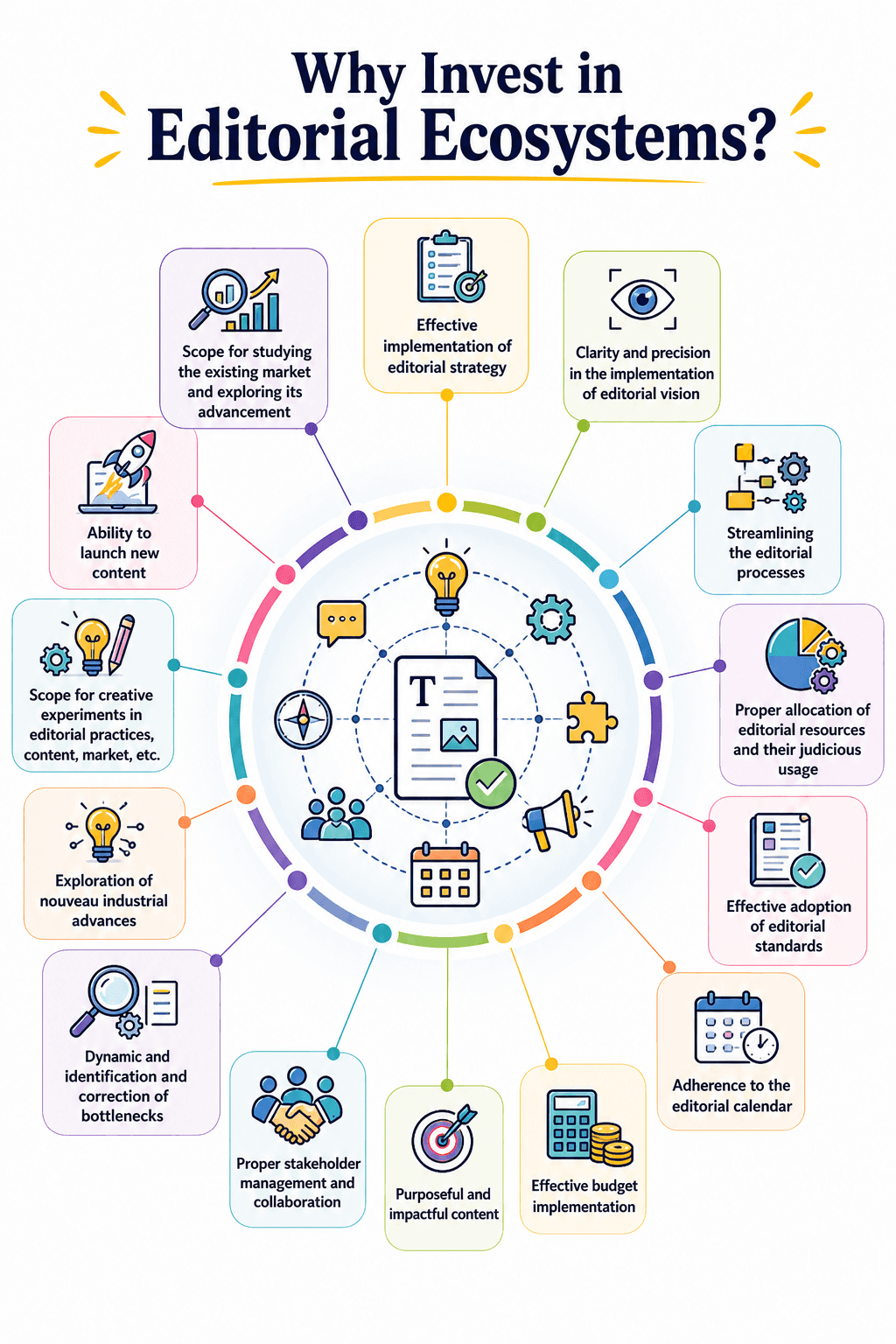
Irrespective of planning, any organisation that uses content in some form or another (even just for marketing) has a process of procuring/generating, finalising, publishing, and disseminating it. The lack of strategic planning, however, makes these editorial systems susceptible to regular fallouts, bottlenecks, and mounting costs.
The absence of a system results in misappropriation of editorial resources, technical and subjective pitfalls during stakeholder management, ignorance of editorial standards and calendar, subpar final content, and collapse of editorial strategy. Furthermore, as the work grows over time, the system failures become sharper and graver.
The Editorial Ecosystems help remove the process blocks developed over time, while ensuring a strategic and dynamic path forward.
The Role of an Editorial Architect
While Editorial ecosystems ensure that the quality and purpose of any editorial product does not suffer under the quantitative pressures and bottlenecks, they do not emerge on their own.
The editorial architect faces the chaos head-on to deliver a structure. They transform existing complications into strategic processes, enriching editorial departments with responsibility, accountability, and continuous advancement. They streamline various editorial processes and layers into a single interconnected network. They seamlessly weave the editorial ecosystem and strategy to establish a futuristic, dynamic, and strategic setup that thrives and delivers a stream of leading content.
A messy desk is a sign of high individual intellect, but a messy editorial system handicaps an organisation. The editorial architect shall design an ecosystem that supports your organisational growth.


